A structured framework for evaluating cloud integration in utility and energy systems.
Consequence-Driven Cloud Integration for Energy Systems
CIRRUS is a cloud integration assessment framework developed by Idaho National Laboratory to help utilities evaluate the adoption of cloud technologies in energy systems. As utilities modernize infrastructure and incorporate cloud-enabled capabilities, CIRRUS provides a structured approach to understanding system readiness, performance impacts, and potential risks.
The framework supports decision-making by breaking down complex systems into manageable components, aligning modernization goals with measurable outcomes, and evaluating both the benefits and consequences of cloud adoption. This enables organizations to move beyond high-level planning and make informed, risk-aware decisions about cloud integration.
How CIRRUS supports decision-making:
Evaluates organizational readiness for cloud integration
Analyzes application architecture and system components
Aligns modernization goals with performance indicators
CIRRUS is designed to support real-world decision-making as utilities modernize infrastructure and evaluate cloud-enabled capabilities. The framework is informed by applied use cases and research, including work conducted through DOE initiatives focused on grid modernization and digital transformation.
By applying CIRRUS to real-world scenarios, utilities can assess how cloud technologies impact system performance, resilience, and operational risk. This approach helps translate high-level modernization goals into structured evaluation and actionable insights.
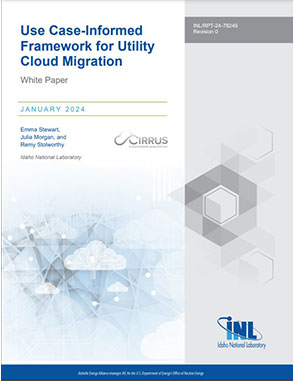
Use Case-Informed Framework for Utility Cloud Migration
The framework and methodology are further detailed in the CIRRUS white paper, which outlines use cases and analytical approaches for cloud integration in electric grid systems.
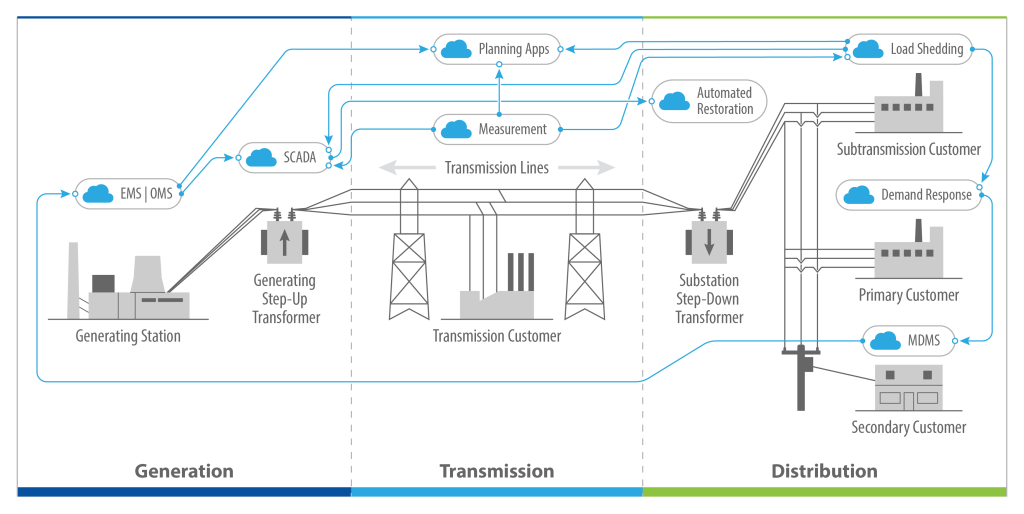
This diagram illustrates how cloud-enabled technologies interact across generation, transmission, and distribution systems, providing the broader system context in which CIRRUS is applied. (Click image to enlarge)
Cloud Integration Across the Energy Ecosystem
Cloud adoption in energy systems involves coordination across utilities, vendors, and integrators, each playing a role in enabling modern grid capabilities. CIRRUS supports this ecosystem by providing a structured framework to evaluate how these systems interact, helping organizations assess readiness, risk, and performance across interconnected environments.
Traditional Utilities
Use cloud services to improve IT and OT capabilities, streamlining operations such as data management and communication.
OT-Integrated Utilities
Adopt cloud solutions to enhance operational efficiency and improve visibility across systems.
Modernizing Utilities
Leverage cloud platforms to support rapid modernization and integration with digital applications.
System Integrators
Facilitate cloud adoption by delivering systemwide services that enable orchestration across distributed assets.
Software Vendors
Provide specialized cloud platforms tailored to the needs of the energy sector.
Hardware Vendors
Enable efficiencies through data collection and centralized processing, supporting new service models and revenue opportunities.
CIRRUS Framework
CIRRUS applies a consequence-driven framework to evaluate cloud integration in energy systems. Rather than providing a simple yes-or-no assessment, the framework guides users through a series of structured stages that assess system needs, architecture, performance, and risk as part of the cloud adoption process.
The diagram below illustrates how these stages are applied, supporting both sequential progression and iterative analysis as organizations refine strategies over time. This approach enables users to move from high-level planning to detailed, actionable insights for deployment.
CIRRUS framework stages
CIRRUS Outputs
CIRRUS translates complex system analysis into structured outputs that help utilities evaluate cloud readiness, quantify risk, and support planning and deployment decisions.
Consequence and Risk Analysis
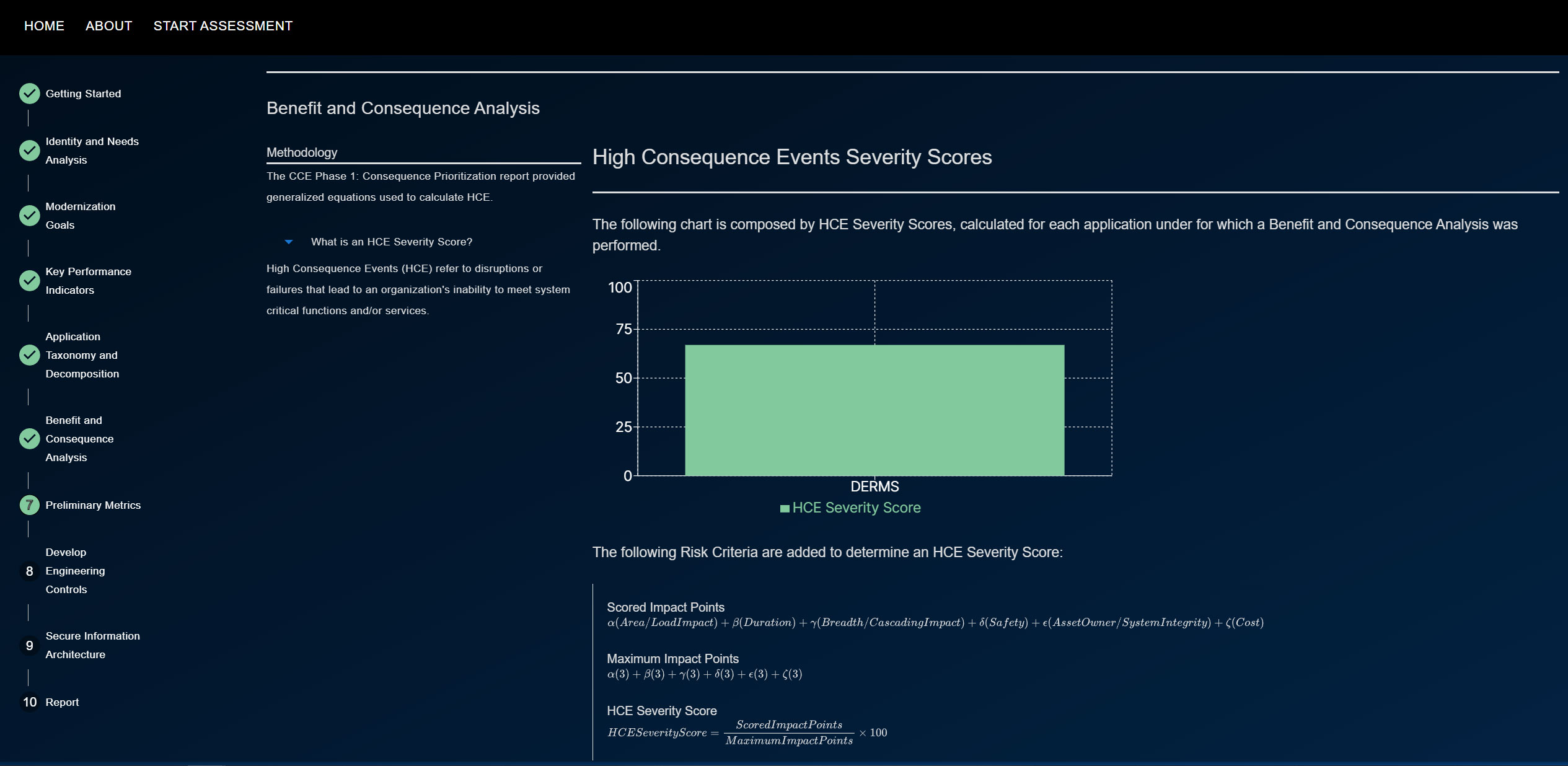
This view highlights High Consequence Event (HCE) severity scores, providing a quantitative assessment of how disruptions or failures impact critical system functions. By evaluating severity across applications, CIRRUS helps identify areas of highest risk and prioritize mitigation strategies.
High Consequence Events chart (Click image to enlarge)
Performance and Readiness Indicators
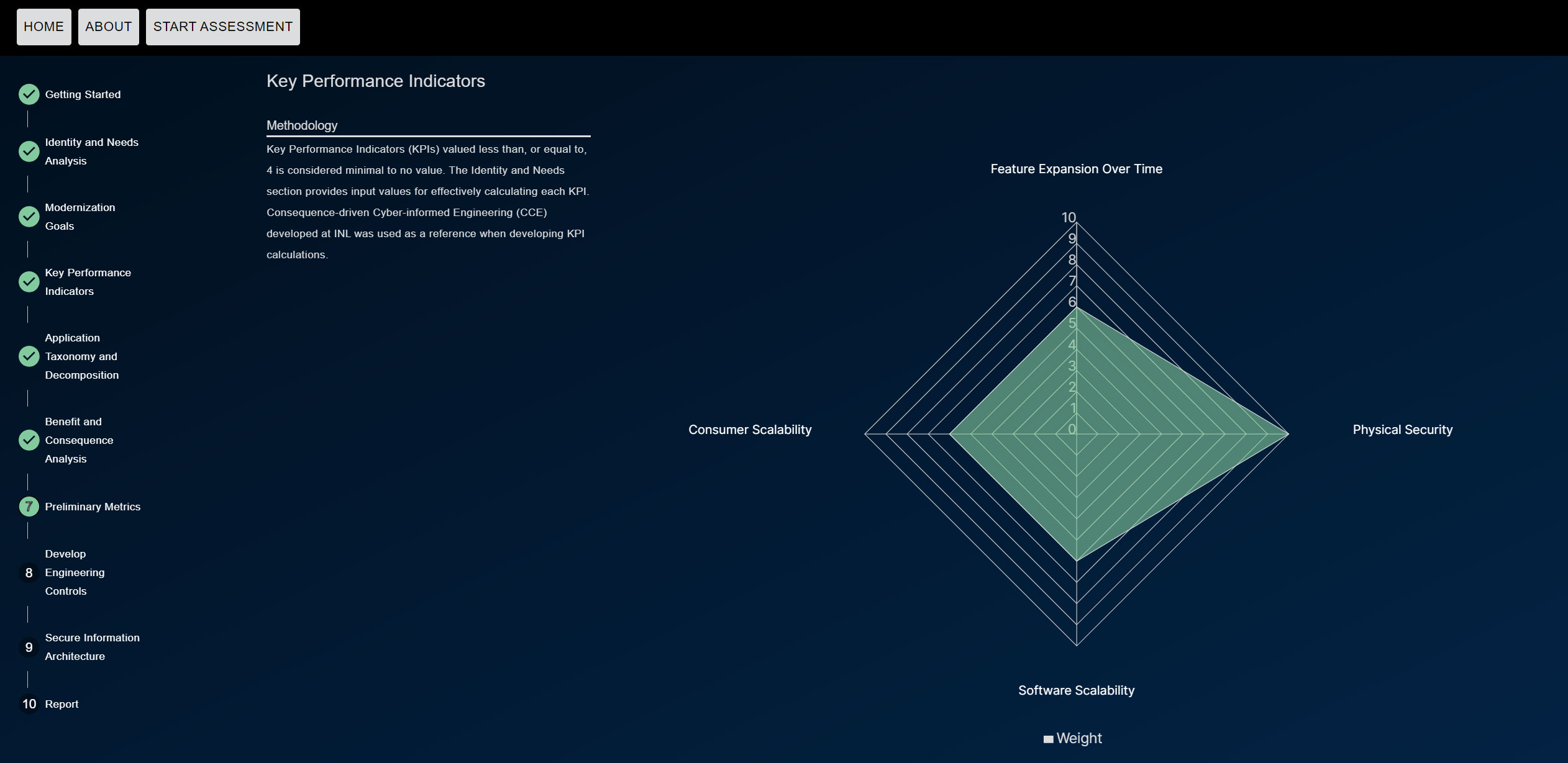
CIRRUS generates key performance indicators (KPIs) that assess system readiness across multiple dimensions, such as scalability, security, and operational performance. These indicators provide a structured view of strengths and gaps, enabling organizations to evaluate readiness and track progress over time.
KPI radar chart (Click image to enlarge)
Understanding CIRRUS Results
CIRRUS provides a comprehensive view of system readiness and performance, combining quantitative analysis with structured evaluation outputs. These results enable organizations to identify high-risk areas, understand system dependencies, and assess how cloud adoption may impact operations.
In addition to risk and performance insights, CIRRUS supports decision-making by connecting analysis results to practical next steps. This includes guidance for improving readiness, identifying training needs, and aligning technical findings with planning and deployment strategies.
Key Outputs:
System risk and cloud readiness profiles
High consequence event severity scoring
Performance indicators across key system dimensions
Key considerations for planning and deployment
Structured questions to guide cross-team decision-making