Applying AI to assess readiness, analyze capabilities, and support grid modernization.
AI Applications for Utilities and Grid Operations
CSDET is exploring how artificial intelligence and machine learning (AI/ML) can be applied across energy systems to support decision-making, improve system visibility, and evaluate emerging technologies. These efforts focus on practical tools and analyses that help utilities and grid operators understand how AI can be applied safely and effectively.
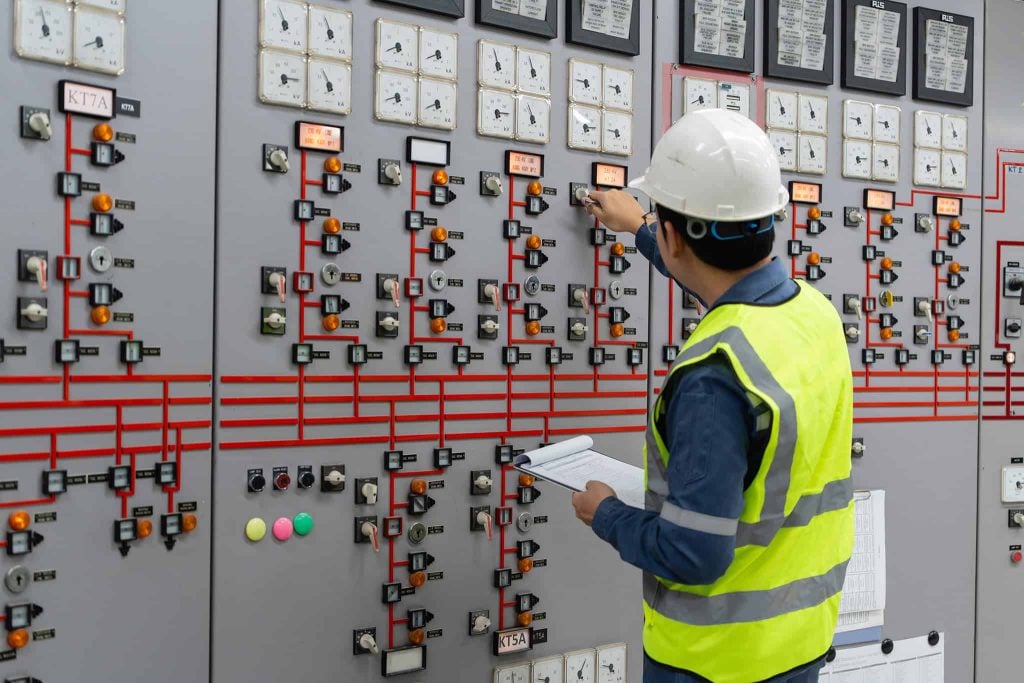
As part of this work, CSDET has developed an AI/ML capabilities analysis to evaluate how AI is being integrated across key grid management systems, including SCADA, EMS, OMS, ADMS, and DERMS. This analysis provides insight into how vendors are incorporating AI into operational technologies and how capabilities vary across platforms.
Supervisory Control and Data Acquisition (SCADA)
Systems used for real-time monitoring and control of grid operations.
The capabilities analysis was conducted using publicly available information and a structured, multi-step prompting process supported by AI tools and reviewed by INL subject-matter experts. Vendor and product selection was informed by initial prompts to Anthropic’s Claude Sonnet 4.5 and the DOE-provided Joulix EnerGPT, then reviewed and supplemented by INL subject-matter experts.
Data collection used a structured, multi-step prompting process:
A primary prompt identified all vendor product URLs and appropriate capability categories
A template prompt established the HTML output format for each category subset
Population prompts extracted and structured data from identified URLs into the template
This modular approach allows the analysis to be updated as vendor products evolve without regenerating the entire dataset.
Validation of the analysis included confirming that source URLs were live and accessible, comparing claimed capabilities against available documentation, and conducting review by INL subject-matter experts. All sources are cited as footnotes in the resulting capability tables.
How AI is used in analysis
AI is used to identify, extract, and structure vendor capability data, while subject-matter experts validate results to ensure accuracy and consistency.
AI/ML Capability Levels
As part of this analysis, AI/ML capabilities are categorized using a four-level maturity model that reflects how functionality is implemented within each system. This classification enables consistent comparison across vendors and platforms.
Traditional
No evidence of AI/ML capabilities within the system.
Emerging
AI/ML capabilities are planned or in development but not yet fully implemented.
Hybrid
The system integrates external applications or platforms to enable AI/ML capabilities.
Native
AI/ML capabilities are embedded directly within the system’s core functionality.
Cognito – AI Readiness Framework
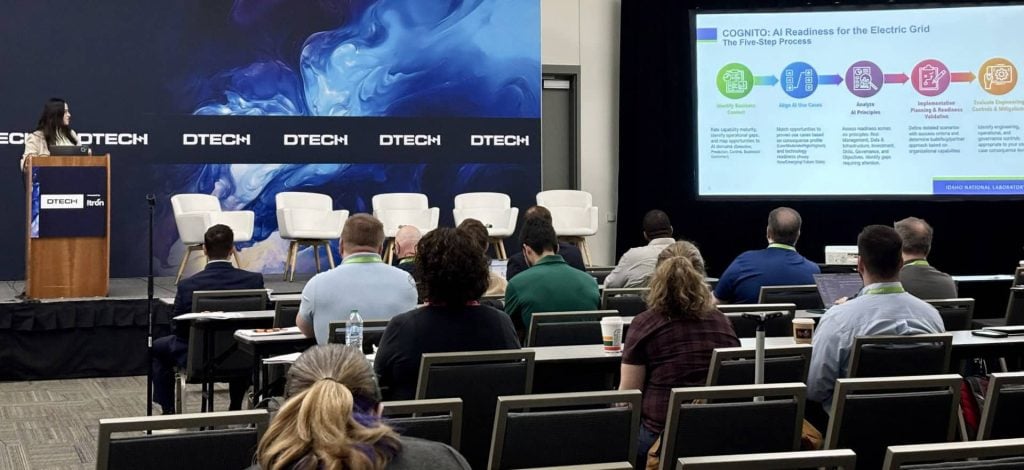
Building on this analysis of AI capabilities across grid systems, Cognito provides a structured way for utilities to evaluate how artificial intelligence can be applied within their own operations. Developed by Idaho National Laboratory, the framework helps organizations assess readiness, identify relevant use cases, and align AI adoption with operational and strategic goals.
Cognito enables organizations to move from exploration to informed adoption through a consequence-driven approach to evaluating AI capabilities.
Juliana Ocampo Giraldo speaks at the DistribuTech conference on the Cognito framework and the risks and rewards of adopting AI in energy operations.
Disclaimer: Data in the capabilities analysis reflects vendor claims harvested from publicly available sources at a specific point in time. Vendor marketing materials may overstate capabilities; claims have not been independently tested or verified by INL. The analysis does not apply differential weighting to vendor claims versus third-party research findings. Users should verify critical information independently before making procurement or deployment decisions. No Controlled Unclassified Information (CUI) was used or sought. The analysis was conducted in accordance with INL’s GenAI model use policy (POL-168), CUI program (LWP-11202), and Quality Assurance Program (PDD-13000).